Reading the sky before you read the water
Many fishing games simulate light, weather and seasons. These tips explain how conditions often change fish behavior and how to adjust your plan.
Time of day
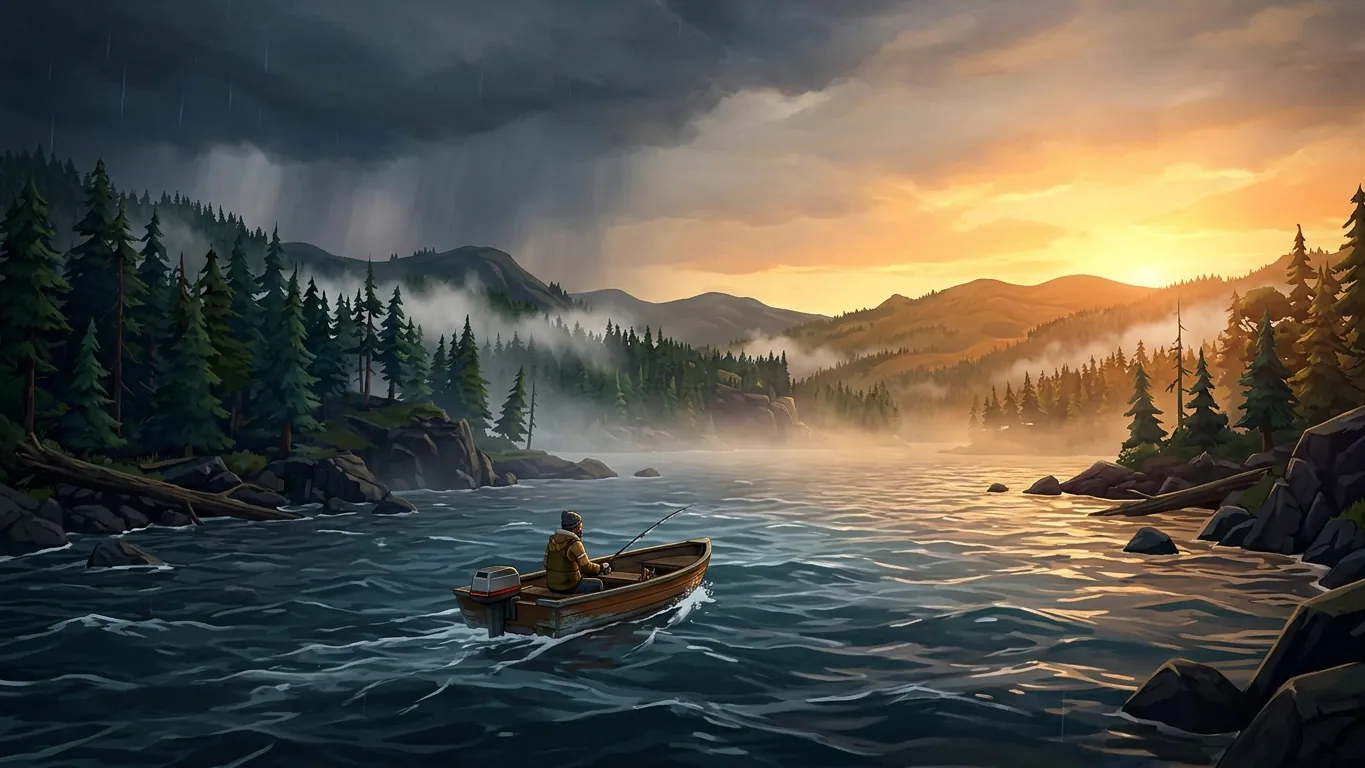
In many fishing games, fish are more active at dawn and dusk. Low light makes predators bolder and brings them closer to shallow water.
Midday often pushes fish deeper or into cover, especially on bright days. That does not mean fishing stops. It means changing depth and location: deeper drop-offs, shaded weed beds or the bottom of rocky points.
Some games also simulate night fishing. Species linked to low light, such as walleye in many titles, may stay active after dark.
Cloud, wind and rain
Cloud cover reduces light, which can make fish less cautious. On overcast days, try shallow areas and faster search lures longer than you would under bright sun.
Wind is often modeled as a positive factor on the windward shore, where waves push small food and break up the surface. It can also make casting and boat control harder, so pick a spot where you can still present your lure well.
Rain may change activity in some games and have little effect in others. Treat it as a reason to experiment rather than a signal to stop.
Seasons
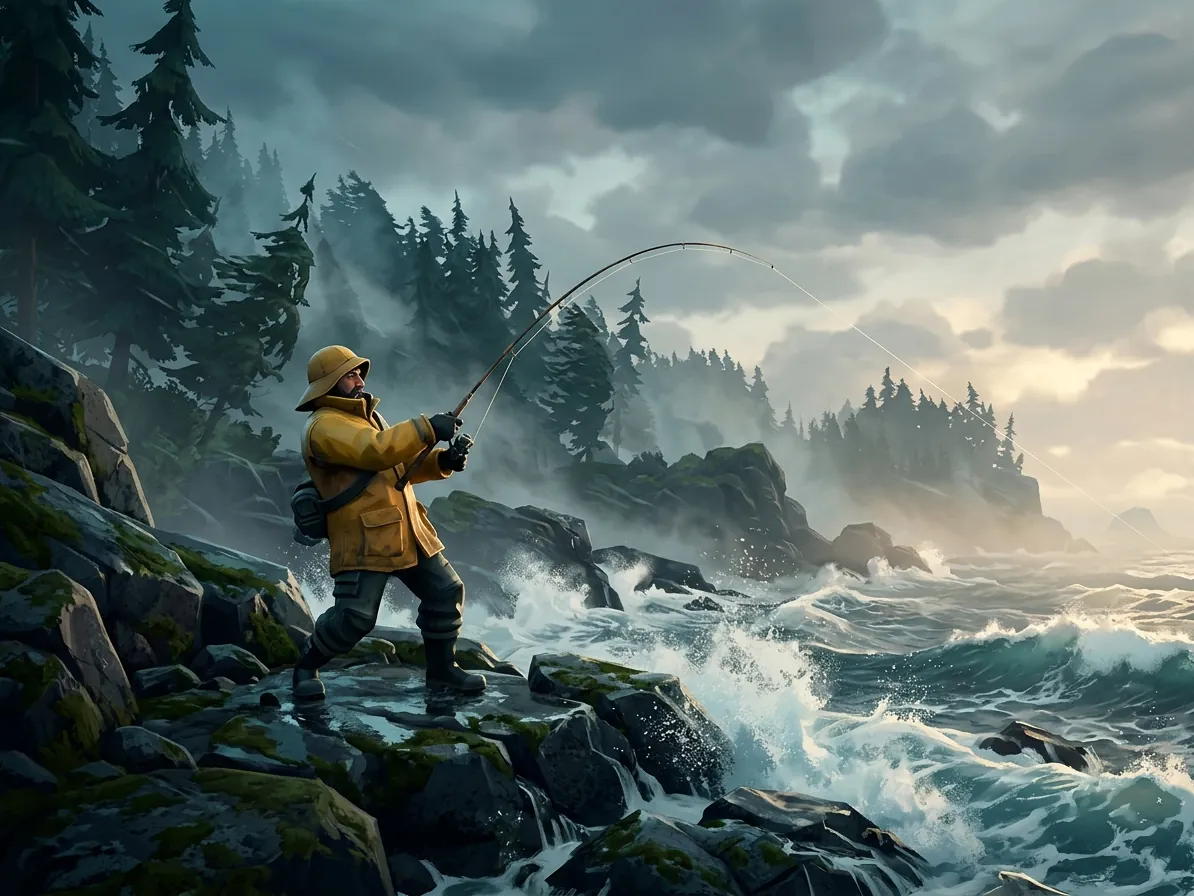
Games with seasons often change where fish live through the year.
In spring, fish commonly move shallow as water warms. Bays and inlets can be productive.
In summer, many species go deeper during the day. Drop-offs, deep weed edges and open water become more important.
In autumn, fish may feed heavily and move between shallow and deep areas. Points and transition zones are worth checking.
In winter, some games switch to ice fishing, which needs its own gear and tactics.
Water temperature
Some fishing simulations track water temperature directly. Cold-water species such as trout tend to stay in cooler, deeper layers when the surface warms. Warm-water species such as bass are often placed in shallower, warmer zones.
If your game shows temperature, check it at different depths with your sonar or depth tools. Use it alongside the season to decide how deep to fish. If the game does not show it, season and time of day are your best clues.
Building a plan around conditions
Before a session, check three things: time of day, weather and season. Then make a simple plan.
Low light or cloud: start shallow with search lures.
Bright sun and calm water: go deeper or fish shaded cover with slower lures.
Strong wind: try the shore where waves hit, if you can still cast and control the boat.
After a set time without bites, change one thing, either depth, location or lure. Keep notes, because conditions in your game may repeat, and what worked once may work again.
Related articles
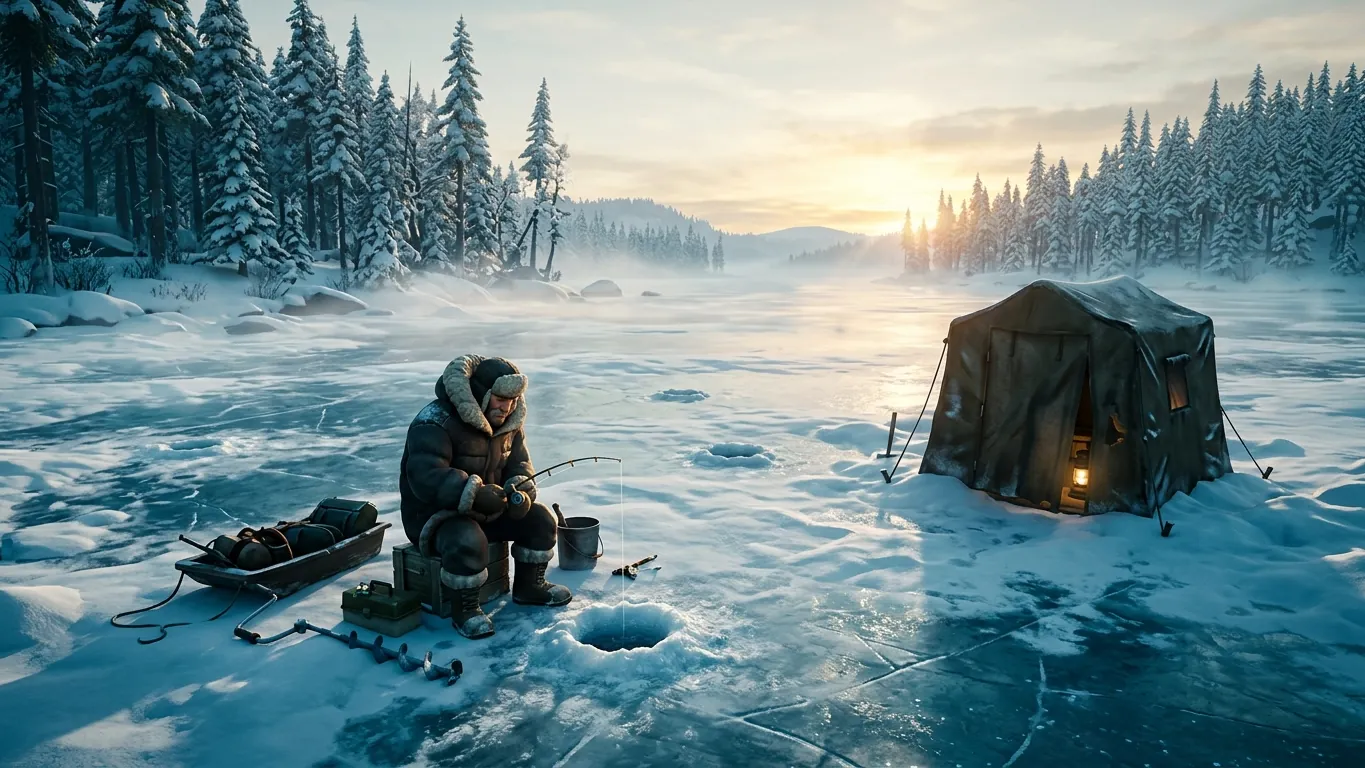 Fishing a frozen northern lake
A guide to ice fishing modes in fishing games: short rods, tip-ups, where to drill holes, jigging rhythm and how winter fishing differs from open water.
Read more
 The appeal of cold lakes and endless pines
An opinion piece on why lakes and rivers inspired by the Canadian wilderness make such strong settings for fishing games, and what we enjoy about them.
Read more
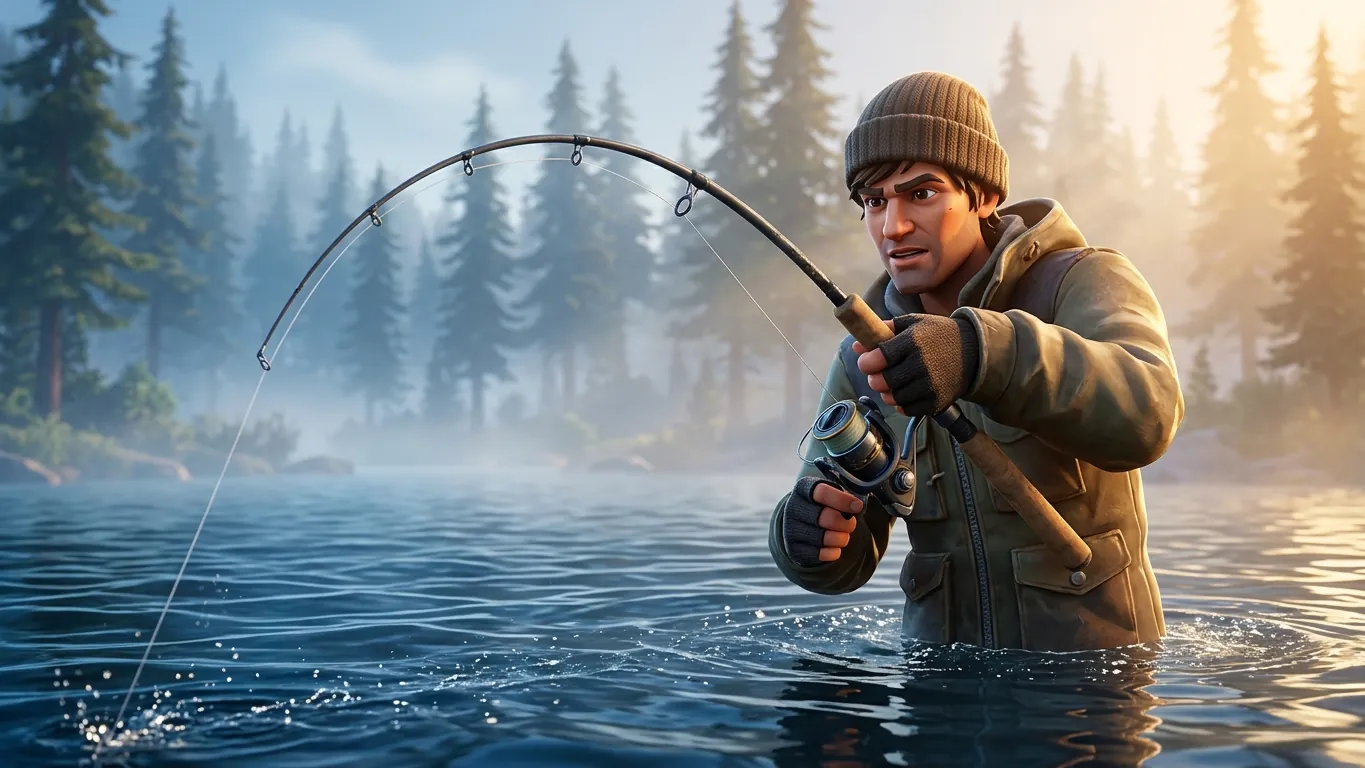 Rod, reel and line: building a balanced setup
A plain guide to rods, reels and line in fishing video games: rod power, reel size, drag and line choice, plus a simple checklist before your first cast.
Read more