Fishing a frozen northern lake
Ice fishing modes change almost everything about a session. This guide covers winter gear, choosing where to drill and how to jig through a hole in the ice.
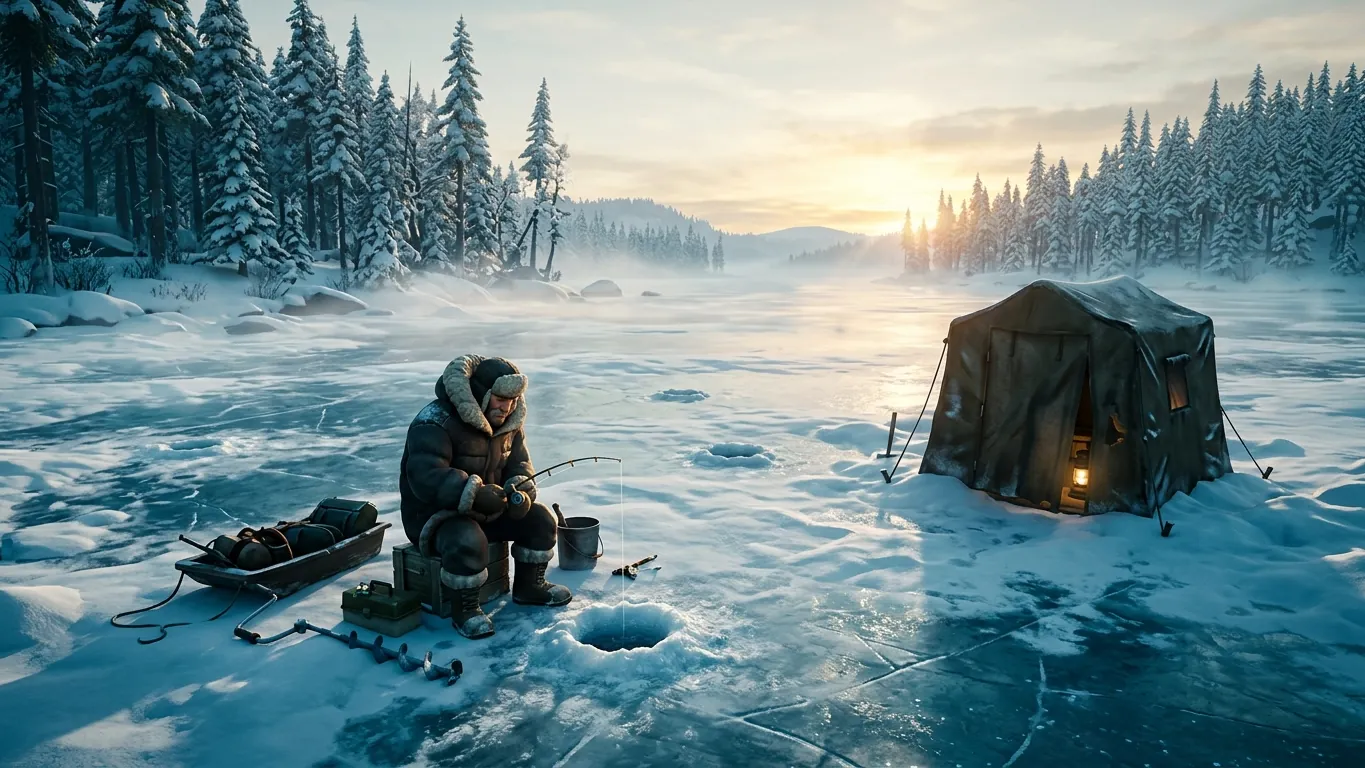
How winter modes differ from open water
On ice, you cannot move a boat or cast far. Your lure goes straight down through a hole, and you choose the spot by walking and drilling. That makes location even more important than in summer.
Many games also slow fish down in winter. Bites can be lighter and less frequent. Sessions tend to reward patience, small movements and careful hole placement.
Common species in northern winter modes include pike, walleye, perch and lake trout, depending on the game.
Winter gear: short rods and tip-ups
Ice rods are short because you fish directly below you. Light ice rods suit perch and small trout. Stronger ice rods handle walleye and pike.
Tip-ups are devices that hold a baited line in a hole and signal when a fish takes it. In games that include them, you can set a few tip-ups for pike while you jig in another hole. This covers more water without moving.
Other common winter items include an auger to drill holes, a scoop to clear ice, a shelter and a flasher or sonar. Check which ones affect gameplay in your title and which are cosmetic.
Choosing where to drill
Use the same structure ideas as in summer, but think about where fish spend the winter. Many games place them near drop-offs, deep holes, the edges of old weed beds and rocky humps.
Drill a line of holes from shallow to deep across a drop-off. Fish each hole briefly. When you find activity, drill a few more nearby to work that depth.
If your game has a winter sonar, look for marks rising toward your lure. That is often a sign a fish is interested.
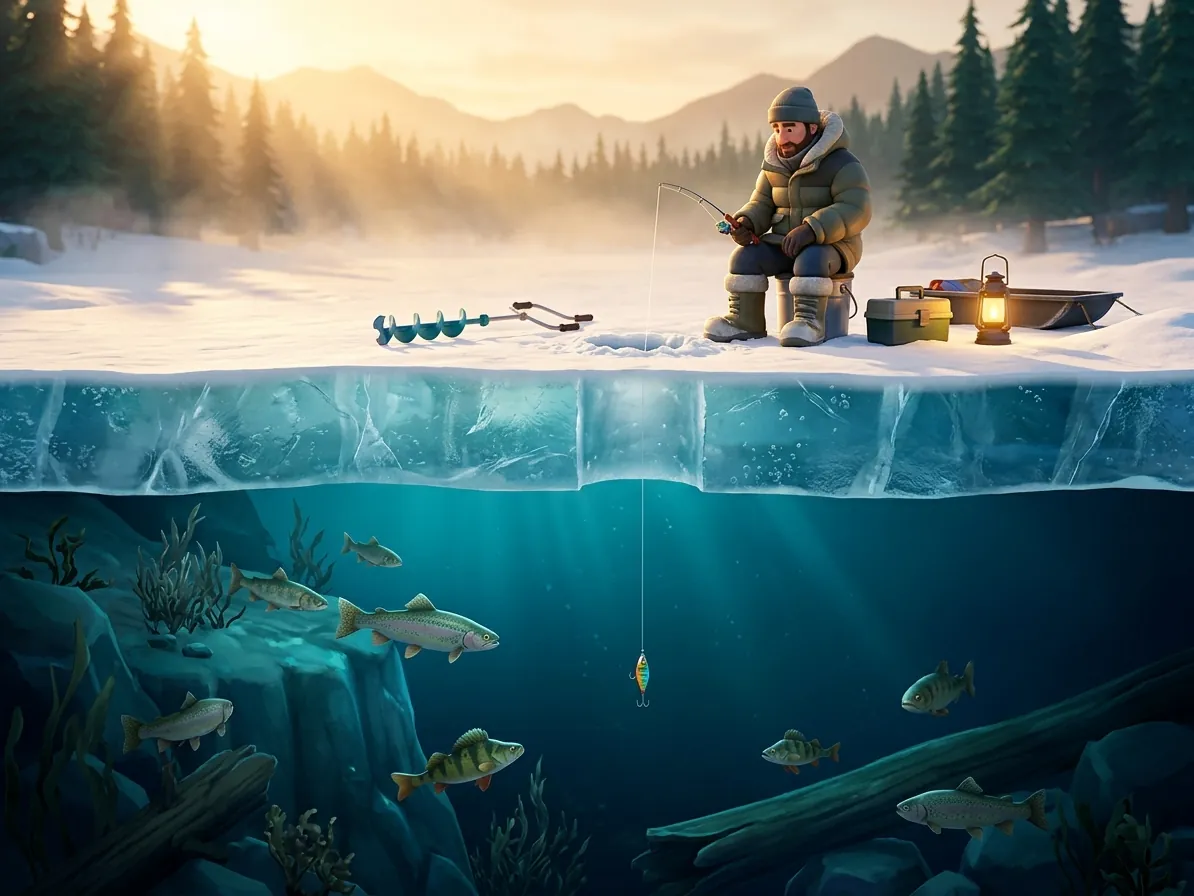
Jigging rhythm
Jigging through the ice is mostly about small, controlled movements. Lift the lure a short distance, let it fall, then pause. Many games register bites during the pause or the fall.
Start with a few aggressive lifts to attract attention, then switch to gentle twitches when a fish approaches. If nothing reacts, change the depth: fish near the bottom first, then work up through the water.
Small spoons, jigging lures and tiny jigs tipped with bait are typical options. Keep lures smaller than in summer when bites are slow.
A note on real ice
Games make ice look safe and simple. Real ice is not. Thickness and strength vary, and conditions can change quickly.
This article is about gameplay only. If you plan to go ice fishing in real life, follow local regulations and guidance from local authorities and experienced local anglers about ice safety, equipment and conditions.
In the game, enjoy the slower pace. Winter maps are often among the most atmospheric places to fish.
Related articles
 The appeal of cold lakes and endless pines
An opinion piece on why lakes and rivers inspired by the Canadian wilderness make such strong settings for fishing games, and what we enjoy about them.
Read more
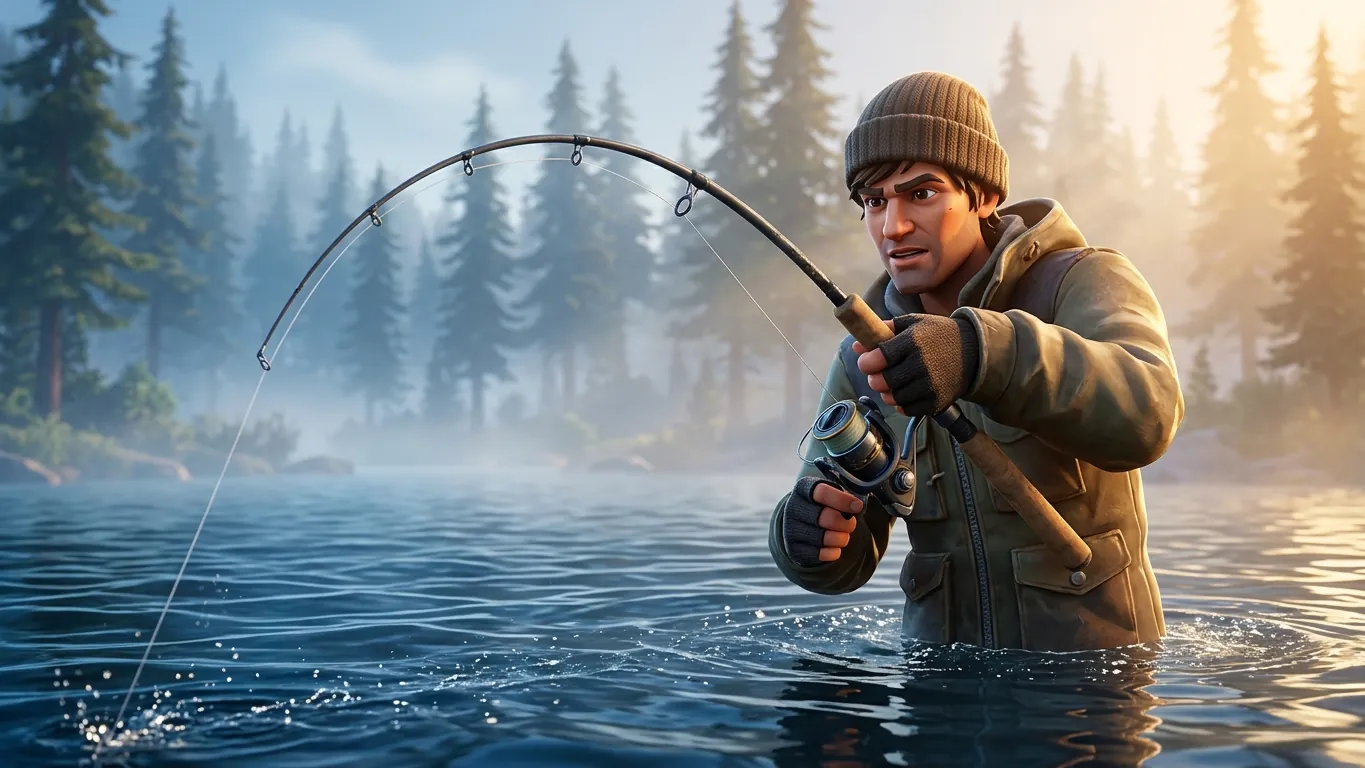 Rod, reel and line: building a balanced setup
A plain guide to rods, reels and line in fishing video games: rod power, reel size, drag and line choice, plus a simple checklist before your first cast.
Read more
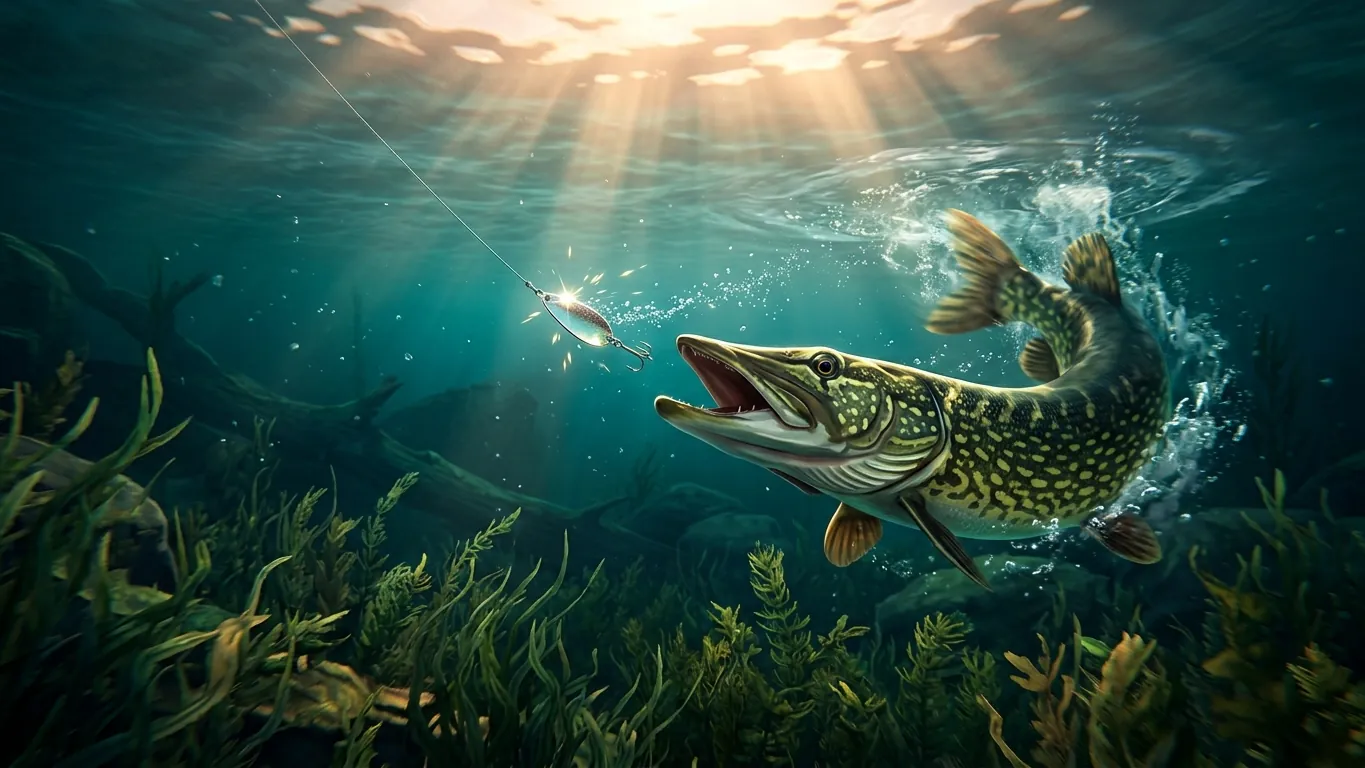 Picking the right lure for northern water
How to choose spinners, spoons, crankbaits, jigs and soft plastics in fishing games set on northern lakes, with tips on depth, colour and retrieve.
Read more