Getting to know the fish of northern waters
Canadian-style fishing games often feature the same core species. Here is how each one is usually portrayed and what that means for your tackle and lures.
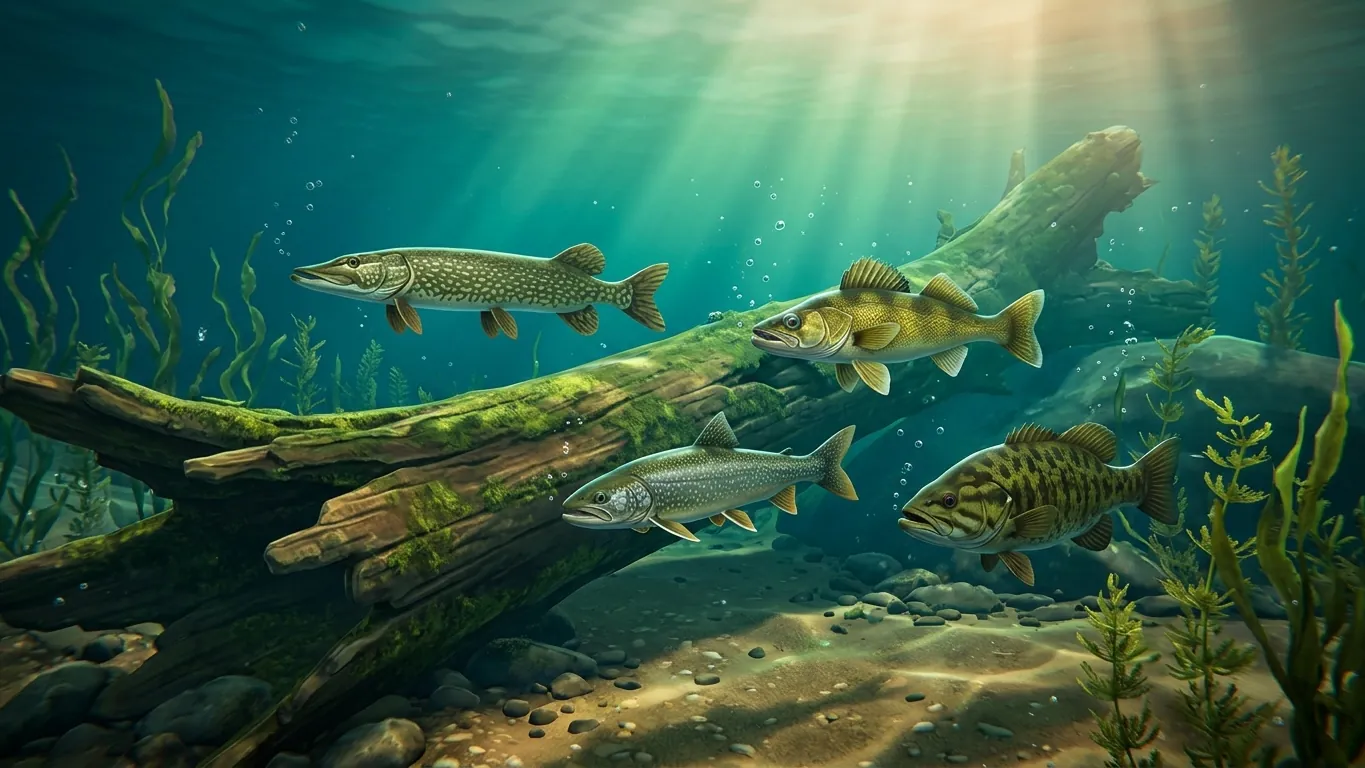
Northern pike: the ambush hunter
Pike are long, toothy predators and appear in almost every northern-themed fishing game. They are usually portrayed as aggressive fish that hide near weeds and strike fast.
Target weed edges in shallow bays. Spoons, spinners, large soft plastics and jerkbaits are common choices. Use medium-heavy or heavy tackle and a strong or steel leader, because many games let pike bite through normal line.
Pike often make a strong first run. Keep the drag set sensibly so the line survives that burst.
Walleye: the low-light feeder
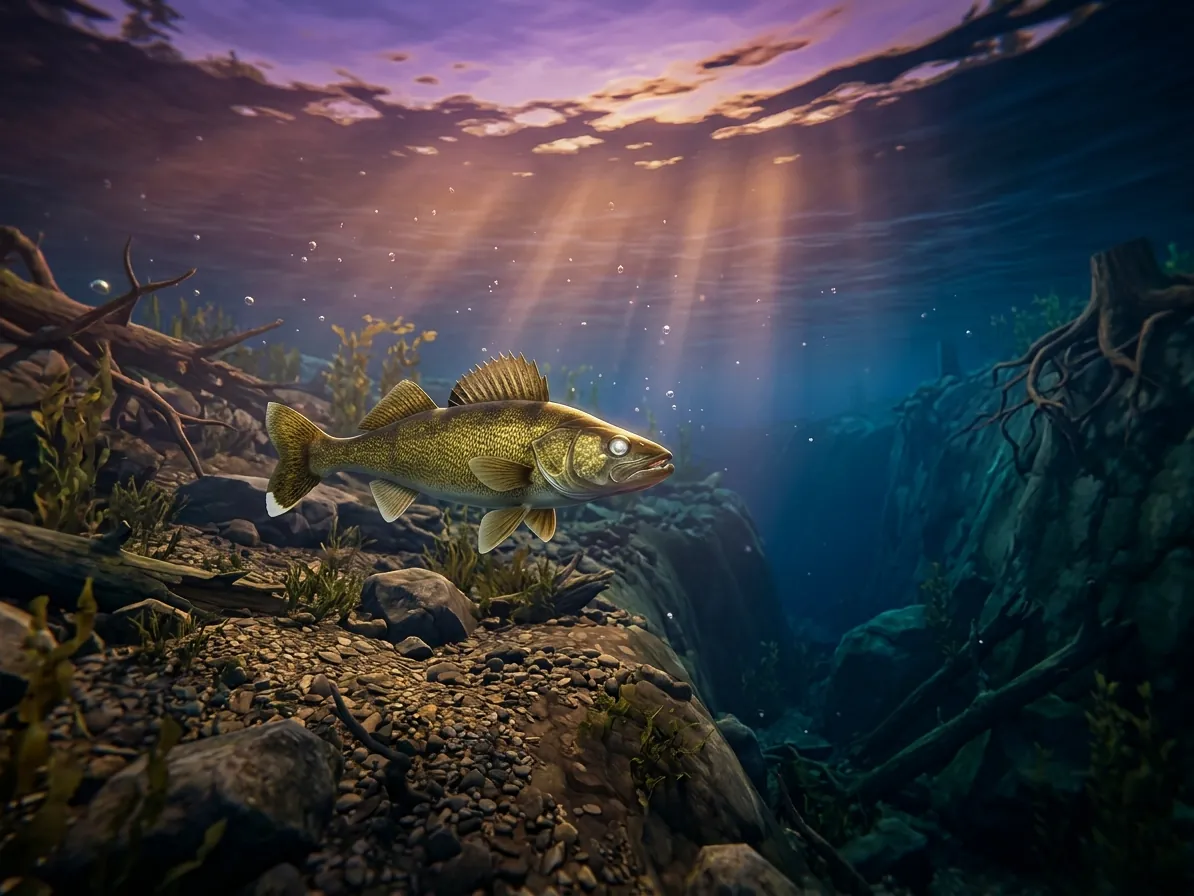
Walleye are often linked with dawn, dusk and cloudy days in fishing games. They usually hold near the bottom along rocky points, drop-offs and gravel areas.
Jigs with soft plastics are the classic approach. Crankbaits that run near bottom depth also work in many games. A medium rod with sensitive line helps detect light bites.
If the game simulates light, try walleye in the early morning or evening before moving deeper during bright midday hours.
Lake trout and brook trout: cold-water fish
Trout are cold-water species. Lake trout in games are often deep fish in large, clear lakes, especially in warmer seasons. Brook trout tend to appear in smaller streams and cool, shallow water.
For lake trout, heavy spoons, deep jigs and trolling setups are common. For brook trout, light rods, small spinners and fine line usually suit the smaller fish and clearer water.
In games that model water temperature, lake trout may move shallower in spring and autumn when surface water is cool.
Smallmouth bass and muskie
Smallmouth bass are often shown as strong fighters around rocks, boulders and gravel. Crankbaits, jigs, tube baits and soft plastics are typical choices. Medium tackle is usually enough.
Muskie are portrayed as large, rare and demanding. They tend to be treated as a long-term goal rather than a quick catch. Expect to need heavy tackle, big lures, a strong leader and patience. Weed edges, rocky reefs and points are common areas to try.
In many games, muskie sessions involve many casts between bites. That is part of the challenge.
Salmon in rivers
Some fishing games include salmon runs, where fish move from large lakes or the sea into rivers. Location and timing often matter more than lure choice during these events.
Look for river mouths, deep pools and the slower water behind rocks. Spoons, spinners and drifting baits are common options. Salmon can be strong, so use a rod and reel with enough line capacity and smooth drag.
Each game handles runs differently. Some tie them to seasons, others to specific maps. Check the in-game information for when and where they appear.
Related articles
 Reading the sky before you read the water
Practical tips on how weather, wind, light, seasons and water temperature can affect fish activity in fishing games with northern settings.
Read more
 Fishing a frozen northern lake
A guide to ice fishing modes in fishing games: short rods, tip-ups, where to drill holes, jigging rhythm and how winter fishing differs from open water.
Read more
 The appeal of cold lakes and endless pines
An opinion piece on why lakes and rivers inspired by the Canadian wilderness make such strong settings for fishing games, and what we enjoy about them.
Read more