Shallow weed beds
Spinners or weightless soft plastics retrieved over or along the weed edge.
Lures are tools for specific depths and situations. This guide explains the main lure types in fishing games and when each one makes sense on Canadian-style lakes.
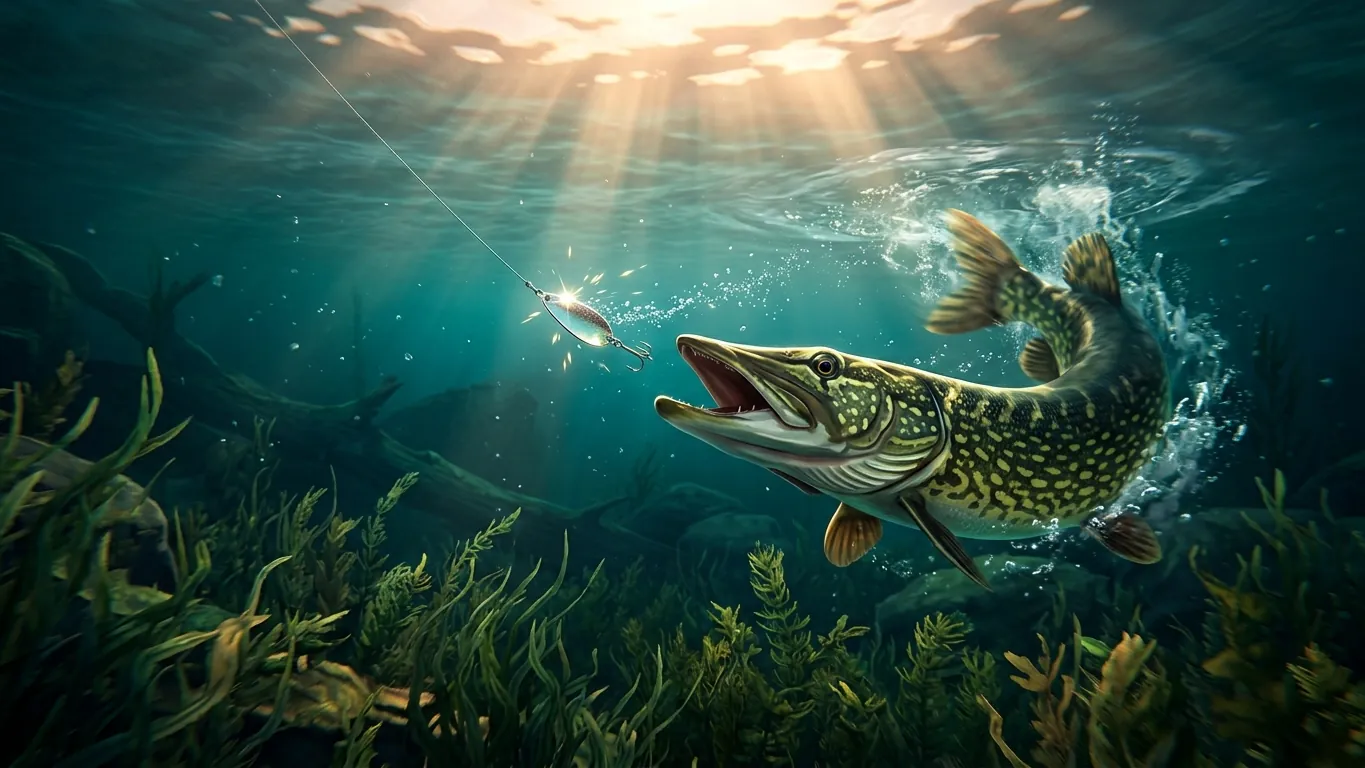
In most fishing games, a lure has a few hidden or visible properties: how deep it runs, which species it attracts, and how the retrieve affects its movement. Some games also factor in colour and size.
The practical rule is simple. Put the lure where the fish are, at the depth they hold, moving in a way they react to. Lure choice is about solving those three problems, not about finding one perfect bait.
Check the lure description in your game. Many list a running depth or a recommended retrieve style.
Spinners have a rotating blade that flashes and vibrates. They are easy to use: cast and reel at a steady pace. In many games they work well for trout, perch, bass and smaller pike in shallow to mid-depth water.
Spoons are curved metal lures that wobble and flash. Heavier spoons cast far and sink quickly, which makes them useful for covering open water or reaching deeper fish. Pike and lake trout are classic spoon targets in northern settings.
If you are exploring a new lake and do not know where fish are, a spoon or spinner is a good search lure because you can cover a lot of water fast.
Crankbaits are hard-bodied lures with a lip that makes them dive when retrieved. The size and angle of the lip decide how deep they go. Short lips run shallow; long lips dive deep.
In games that model depth carefully, crankbaits are excellent for walleye and bass along drop-offs. Choose one that reaches just above the bottom where the fish hold. If you keep snagging, switch to a shallower model or reel faster to lift it.
Floating crankbaits rise when you pause. That pause-and-rise movement often triggers bites in games that reward varied retrieves.
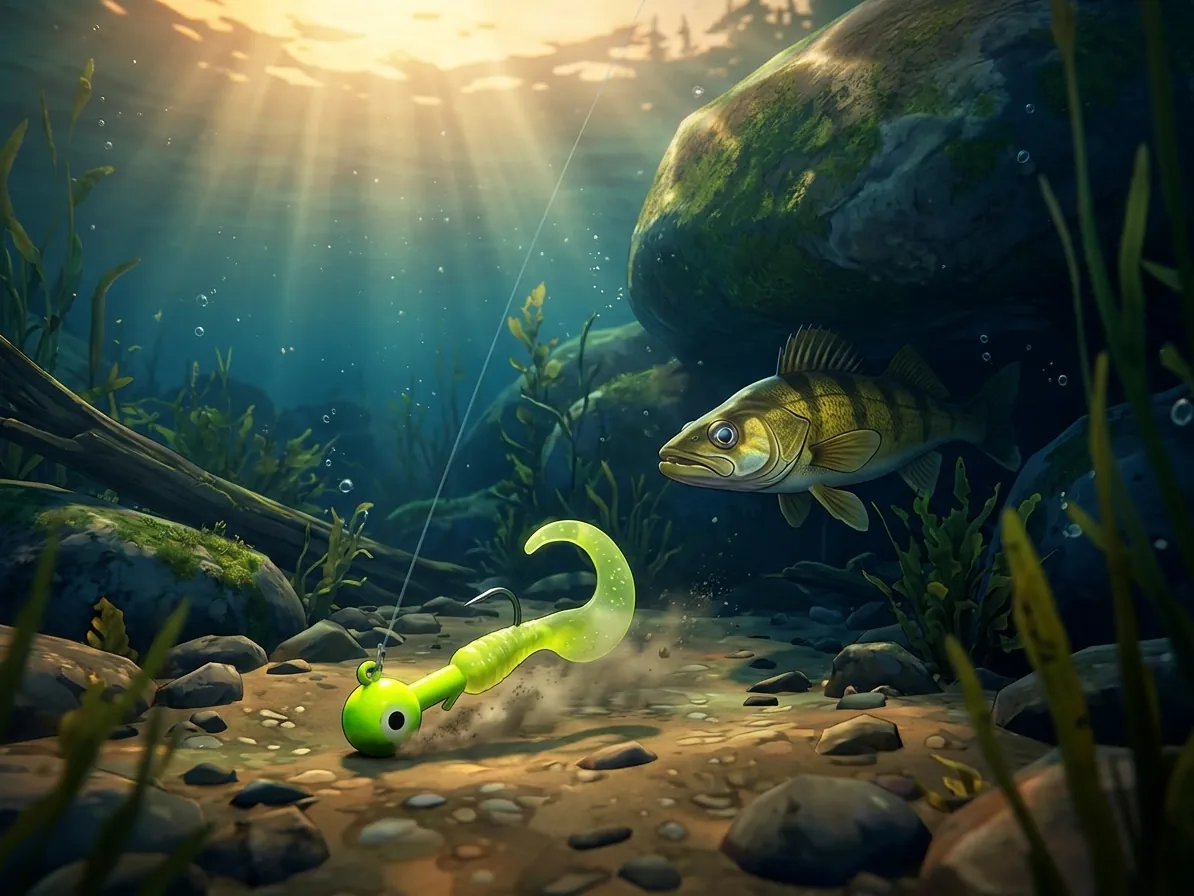
Jigs are weighted hooks, often paired with a soft plastic body. They sink to the bottom and you lift and drop them with short rod movements. This keeps the lure in the strike zone for longer.
Jigs are a strong choice for walleye, bass and deep fish in cold water. Soft plastics such as grubs, worms and swimbaits add movement. Some games let you rig them weightless for slow, shallow presentations near weeds.
Use a fast action rod and low-stretch line with jigs. That combination gives you a clearer feel of bites and more reliable hook sets in games that simulate them.
Use these pairings as starting points and adjust to the game you play.
Spinners or weightless soft plastics retrieved over or along the weed edge.
Heavy spoons or deep-diving crankbaits to reach suspended fish.
Jigs worked down the slope, or crankbaits that tick the bottom.
Spinners and spoons to cover water quickly until you find activity.
Many games link lure colour to light and water clarity. A common pattern is natural colours in clear water and bright day light, and brighter or darker colours in murky water or low light. Treat this as a guideline, not a rule.
Retrieve speed is often more important than colour. If nothing bites, change speed first, then depth, then lure type. Change one thing at a time so you learn what the game responds to.
 Where to cast on a new northern lake
Learn how to find productive fishing spots in games: reading maps, depth, structure, weed beds and river current on northern lakes and rivers.
Read more
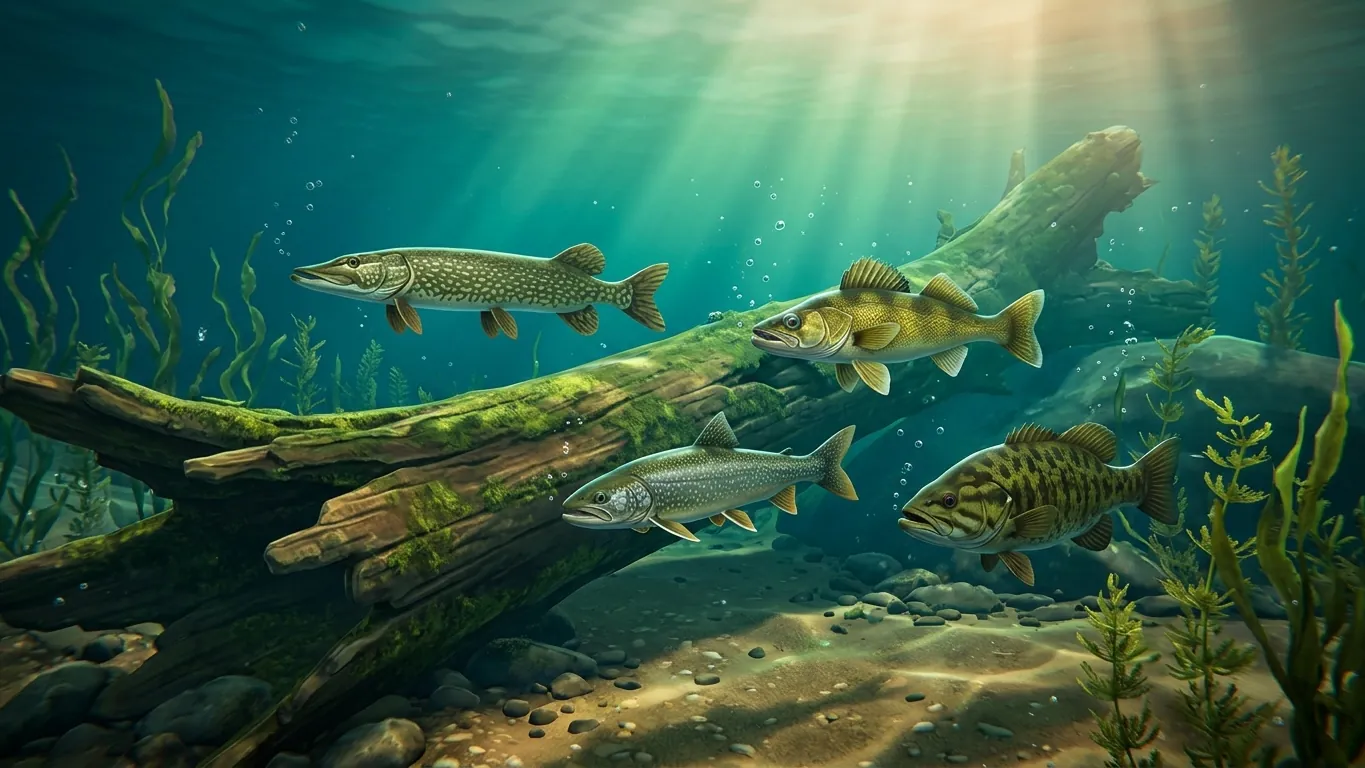 Getting to know the fish of northern waters
An explainer on northern fish species in fishing games: pike, walleye, trout, bass, muskie and salmon, with typical habits, lures and tackle notes.
Read more
 Reading the sky before you read the water
Practical tips on how weather, wind, light, seasons and water temperature can affect fish activity in fishing games with northern settings.
Read more